
The 10 Most Expensive Cards in POP Series 5
Ah, the POP Series 5—where nostalgia meets the merciless heart of the secondary market. Released in 2007 as part of the Pokémon TCG's Player's Organized Play series, this set is a treasure trove for collectors and players alike. It was a time when Pokémon was riding a resurgence wave thanks to the booming TCG scene, giving birth to cards that are now revered not just for gameplay but also for their art and rarity. The POP Series 5 boasts a cast of beloved Pokémon, including fan favorites and hidden gems, making it a must-have for anyone serious about their collection. The set is defined by its unique inclusion of Delta Species Pokémon, which introduced alternate typings, adding a fresh twist to the classic gameplay mechanics. This set has become increasingly relevant, as collectors seek out cards that bridge the gap between competitive relevance and artistic value.
As we dive into the top ten cards of this set, be prepared to experience a rollercoaster of price points. The market for these cards has been a wild ride, with some experiencing meteoric rises while others remain steady or even declining. The standout star? Espeon ★, which commands a jaw-dropping price and showcases just how the market can be influenced by supply and demand dynamics. Other cards, like the Mew δ and Lugia, follow closely behind but offer a different flavor of value. Whether you're looking to bolster your collection or hunt for competitive staples, POP Series 5 has something for everyone. Let's explore these ten crown jewels and see what makes them tick—and why some of them might have your bank account weeping.
Browse the complete POP Series 5 set
View all 17 cards, prices, and your collection progress
Espeon ★
#16 · Rare · Normal
Market Price
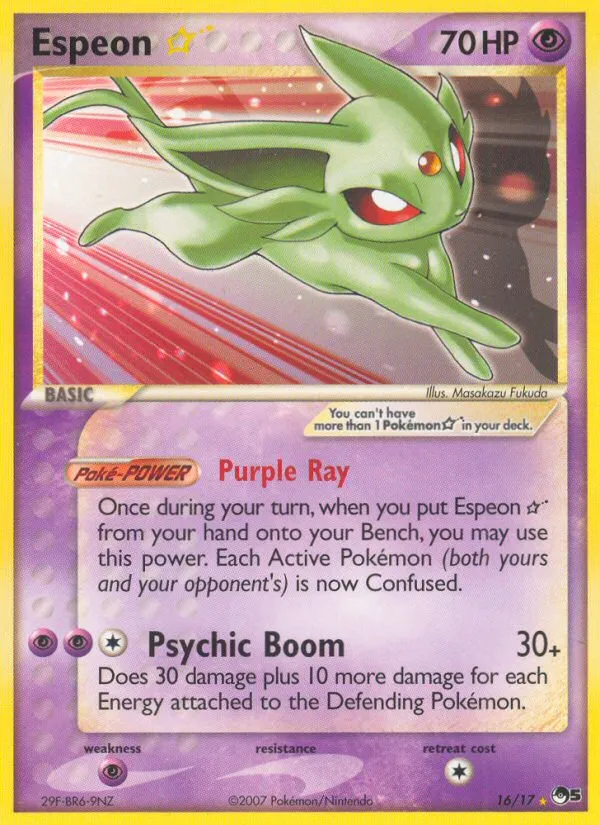
Espeon ★ (#16) is the heavyweight champ of the POP Series 5, and let me tell you why it commands a staggering price of $1,900. First off, rarity plays a huge role; there just aren’t many of these floating around. A strong demand from collectors who want to own a piece of Pokémon history has driven prices into the stratosphere. The artwork — featuring Espeon bathed in a dreamy, ethereal glow — is breathtaking, showcasing the talent of artist Ken Sugimori, who has been a mainstay in Pokémon artwork since the beginning. This card also has historical significance, as it was one of the rarest cards originally released, making it a gem for both competitive players and collectors. Though not a staple in current meta decks, its status as a collector's piece keeps it relevant. The price has been on a steady uptick over recent years, proving that nostalgia can indeed pay off. Pulling this card is akin to finding a unicorn in the wild — it’s exceedingly rare. Hot take? If you manage to get your hands on one, you might just want to keep it in a safe rather than putting it out there for a tournament!
 Buy on TCGPlayer
Mew δ
#3 · Rare · Normal
Market Price
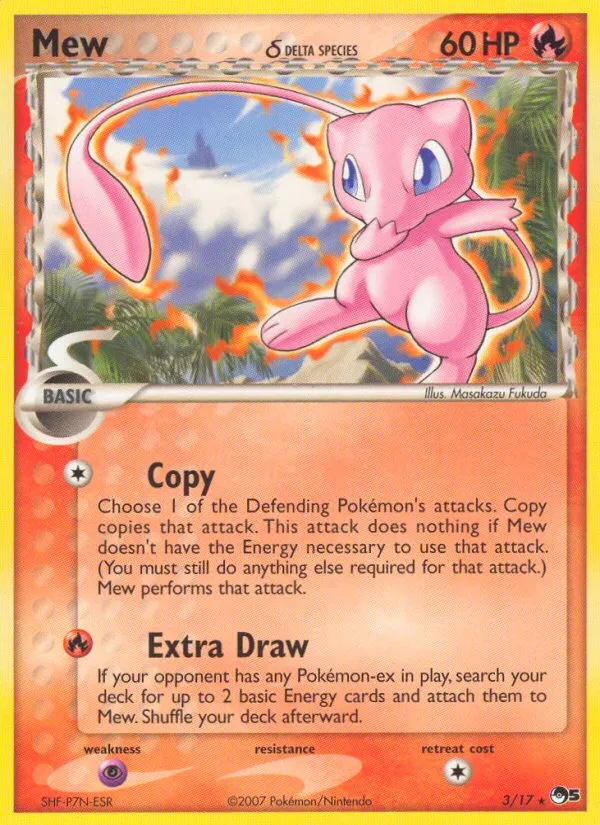
Mew δ (#3) sits at a respectable $135.99, an enticing price for a card that embodies both nostalgia and competitive potential. It features a striking design that captures Mew in its classic mystical form, painted with the gentle touches of the artist Kagemaru Himeno. This card's Delta Species typing offers a unique twist, allowing it to blend seamlessly into various deck strategies, particularly as a useful support Pokémon in psychic builds. Its low energy attack—costing just one Psychic energy—makes its use a breeze, and it can still hold its own in the right decks. Historically, Mew δ has fluctuated in price, but its core fanbase remains strong, ensuring that it stays on collectors' radar. Given the cards' iconic status and nostalgic pull, its value is likely to hold, if not rise. Pull rates for this card are moderate, making it a potential chase card. If you’re looking for something that balances player utility with collector allure, Mew δ is a solid bet.
Lugia
#2 · Rare · Normal
Market Price
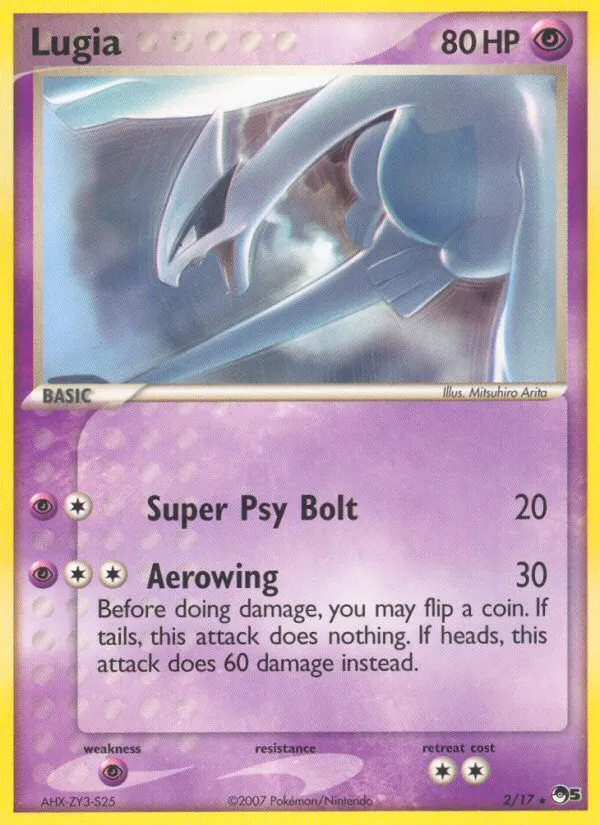
Lugia (#2) is not just a legendary Pokémon; it’s also a legendary piece of cardboard, fetching around $77. This card's art, crafted by the talented Atsuko Nishida, features Lugia soaring majestically through the clouds. Its visual appeal is enhanced by the vibrant colors and the iconic pose. While its price isn’t exactly breaking the bank, it reflects its popularity, boosted by its competitive history and the nostalgia of the original games. In terms of competitive play, Lugia has seen its share of time in various archetypes, particularly in earlier formats where it offered solid support. The price has been relatively stable, which suggests it’s become somewhat of a long-term hold for collectors. The pull rates are decent, but that only adds to its desirability. If you’re on the fence, this card is a solid entry point into the POP Series 5 without sending your wallet into a tailspin.
Charmeleon δ
#5 · Uncommon · Normal
Market Price
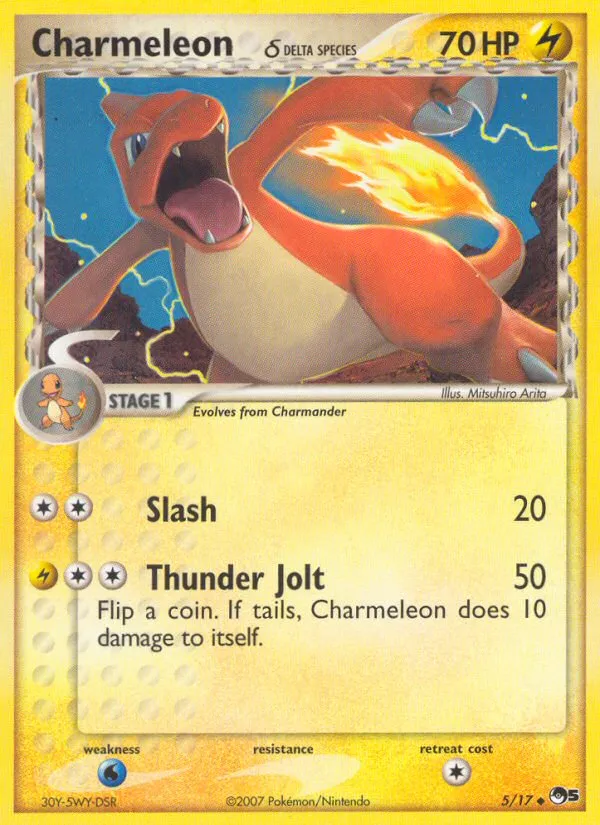
Charmeleon δ (#5) is a surprising standout at $63.50, considering it’s merely an Uncommon. The artwork shows a fiery Charmeleon with a dynamic pose, capturing its fierce personality. While it may not have the same legendary status as others, its Delta Species nature adds a level of intrigue, making it a valuable piece for collectors. Beyond the aesthetics, this card has been a part of various competitive decks, especially during the era when Delta Species Pokémon were all the rage. Price-wise, it’s been climbing steadily, likely due to its unique attributes and the wave of nostalgia driving the market. Pulling a Charmeleon δ is easier than snatching the top-tier cards but still offers a thrill. If you’re looking for something that packs a punch without breaking the bank, Charmeleon δ is a fiery addition.
Pikachu
#12 · Common · Normal
Market Price
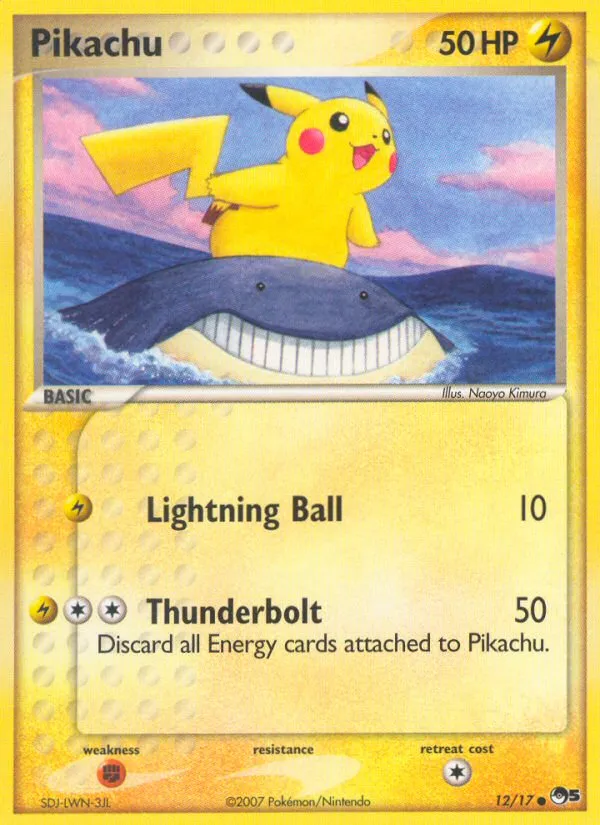
Pikachu (#12) may be the face of Pokémon, but at $43.54, this Common card shines for its nostalgic value rather than competitive prowess. The artwork is charming, depicting Pikachu in its playful, cute demeanor, which has endeared it to millions of fans. While you won’t see this card dominating tournaments, it’s a beloved piece for collectors, especially those looking to own a bit of that nostalgic magic. The price has remained relatively stable, as Pikachu cards often do, but it’s more of a sentimental pick than a strategic one. Pull rates are generous, meaning it’s easier to acquire, making it accessible for fans. So, if you’re looking to add a splash of iconic charm to your collection without going broke, Pikachu is your guy — or should I say, your mouse?
Umbreon ★
#17 · Rare · Normal
Market Price
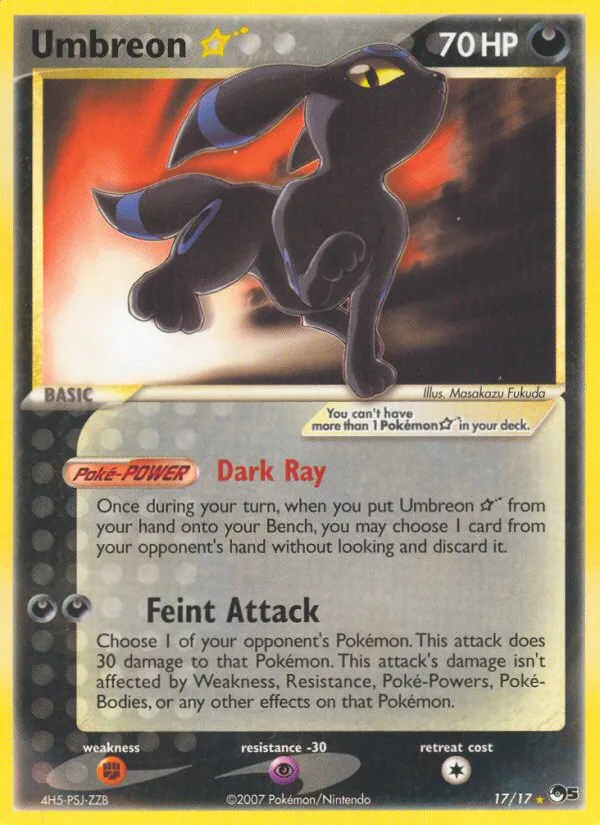
Umbreon ★ (#17) is another fan favorite, valued at $36.23 for its alluring art and rarity. The dark, haunting aesthetic of this card captures Umbreon at its best, showcasing the brilliance of artist Masakazu Fukuda. Umbreon’s popularity in both competitive play and as a collector's piece keeps its price from nosediving, despite being a Rare card. It’s particularly strong in darkness-type setups, offering utility in various meta builds. The price has had a minor fluctuation but has generally remained strong due to its desirable attributes. Pulling an Umbreon ★ is a thrill, particularly because of its high demand among collectors. If you’re adding cards to your portfolio, you’ll want to make sure Umbreon is on your radar — it’s a keeper for sure.
Double Rainbow Energy
#4 · Rare · Normal
Market Price
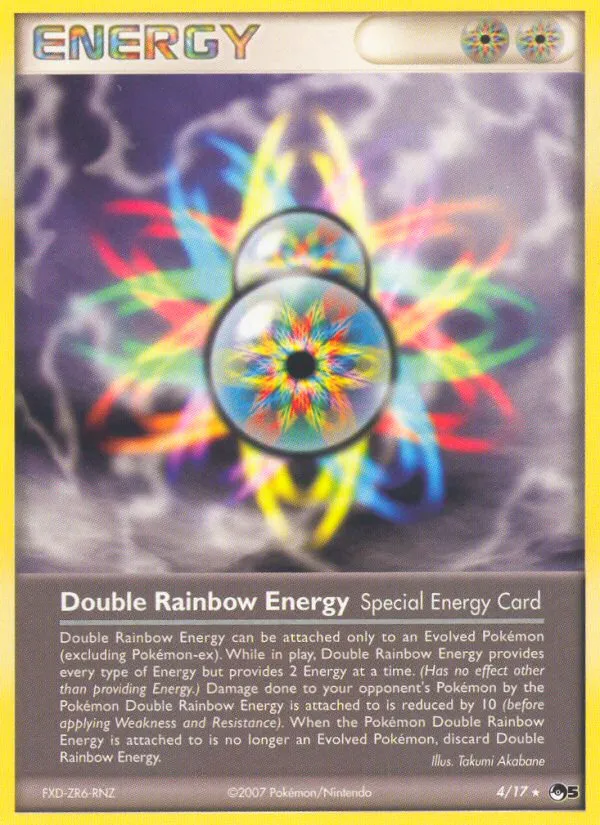
Double Rainbow Energy (#4) is a must-have energy card coming in at $35. This card isn’t just a pretty face; it’s a cornerstone for many deck strategies, allowing for flexible energy placements. The artwork is straightforward but effective, showcasing the concept of energy in a vibrant, rainbow hue that visually reflects its utility. In competitive play, its value cannot be overstated, providing an easy way to power up Pokémon of any type. The price is decent for what it offers, making it worthwhile, especially with the rise of colorless and multi-type decks. Pull rates are fair, ensuring that you’re likely to find it if you’re ripping packs. Investing in Double Rainbow Energy makes solid sense if you want something that can pull its weight on the battlefield.
Pikachu δ
#13 · Common · Normal
Market Price
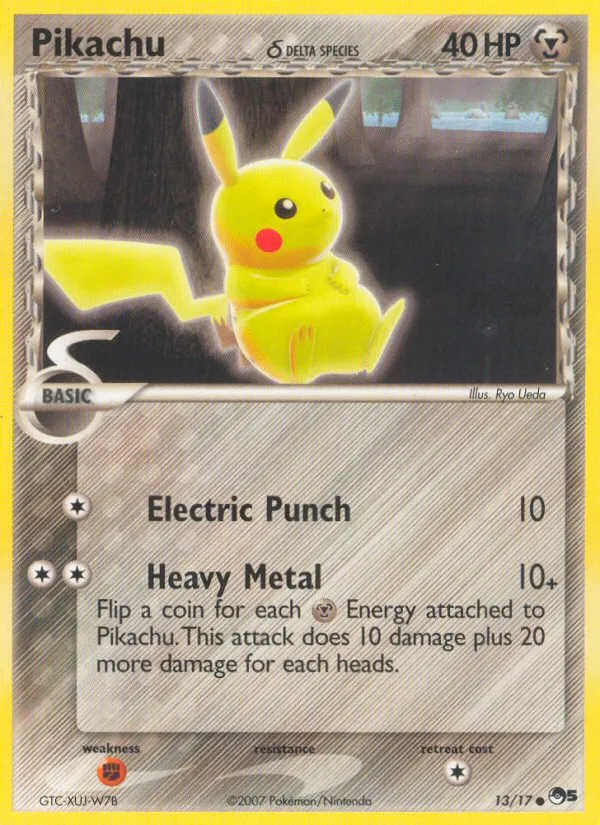
Pikachu δ (#13) sells for $33.69, and it’s not just another Pikachu; it's part of the Delta Species lineup, adding a unique twist with its Electric-type prowess. The artwork is imaginative, showcasing Pikachu in a way that resonates with fans of the series. While it’s a Common card, its Delta Species rarity makes it more appealing, especially for collectors who want to own a piece of this unique mechanic. In competitive play, it’s not as impactful compared to others, but its charm lies in its collectible nature. The historical price has seen fluctuations, but it generally holds steady due to its appeal. Pull rates aren’t terrible, making it more accessible. If you’re in the market for cards that offer both nostalgia and a bit of flair, Pikachu δ is a solid choice.
Charmander δ
#10 · Common · Normal
Market Price
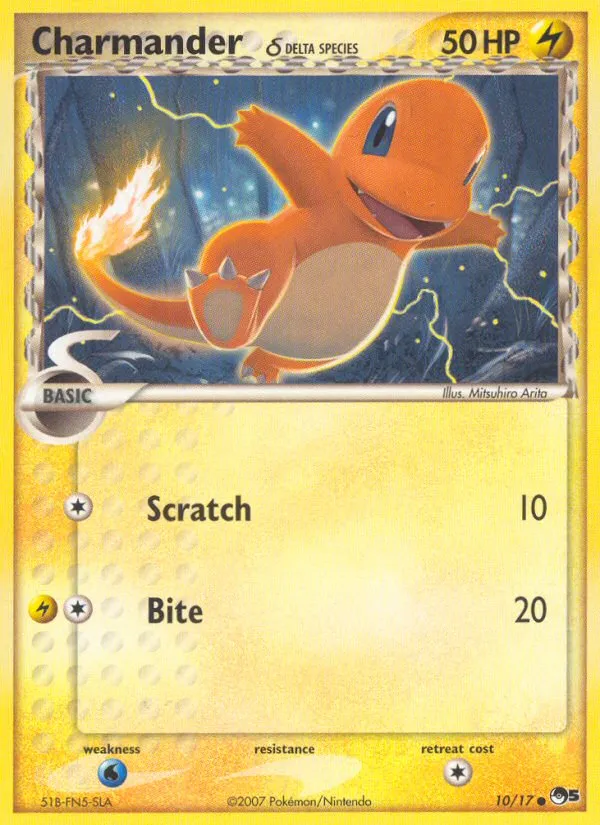
Charmander δ (#10) at $30.83 is another Common with a unique twist, appealing largely to collectors. The artwork showcases Charmander in a fiery pose, perfectly capturing its personality. Like other Delta Species cards, it offers something different that fans are drawn to, particularly those who grew up with the original series. While it’s not a competitive powerhouse, its nostalgic factor gives it a certain charm. Its price has remained stable, making it a reasonable option for those looking to expand their collections. Pull rates are decent, which makes it an easy find in packs. If you’re trying to snag a piece of nostalgia without spending a fortune, Charmander δ is a smart pickup.
Rare Candy
#7 · Uncommon · Normal
Market Price
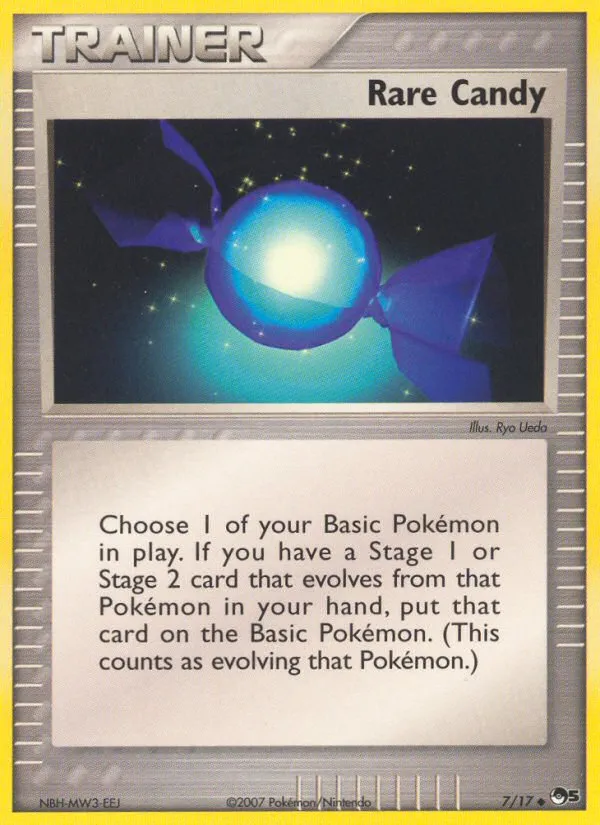
Rare Candy (#7) rounds out the list at $14.99, a solid Uncommon Trainer card that has its share of competitive relevance. The artwork is functional, emphasizing its role in gameplay rather than aesthetics. As a Trainer card, its utility is essential for evolving Pokémon quickly during battles, making it a staple in several deck archetypes. In terms of pricing, it’s one of the more accessible options in this set, with a steady market presence. Pull rates are favorable, allowing players to easily acquire multiples for their decks. It may not have the pizazz of other cards in this series, but if you’re serious about your Pokémon battles, Rare Candy is a crucial component to have in your arsenal.
The market for POP Series 5 is vibrant and full of unique opportunities, but it’s essential to tread carefully. Cards like Espeon ★ have proven themselves as standout investments, while others like Rare Candy are more utility-focused. If you’re looking for investment potential, keep your eyes on Mew δ and Umbreon ★, which have consistently risen in value and demand. On the other hand, cards like Pikachu and Charmander δ represent pure collector appeal without the hefty price tags. As for whether this set is worth investing in or just ripping packs, I’d say it’s a bit of both — there are solid pickups here that you can enjoy and possibly see returns on in the future. Just remember: keep your wallet close and your heart closer, because this market can be as unpredictable as Pikachu using Thunderbolt on a Magikarp!
Prices last updated: April 8, 2026 at 4:47 AM UTC
Market prices sourced from TCGPlayer. Affiliate links may earn us a commission at no cost to you.
Browse all 17 cards in POP Series 5 →